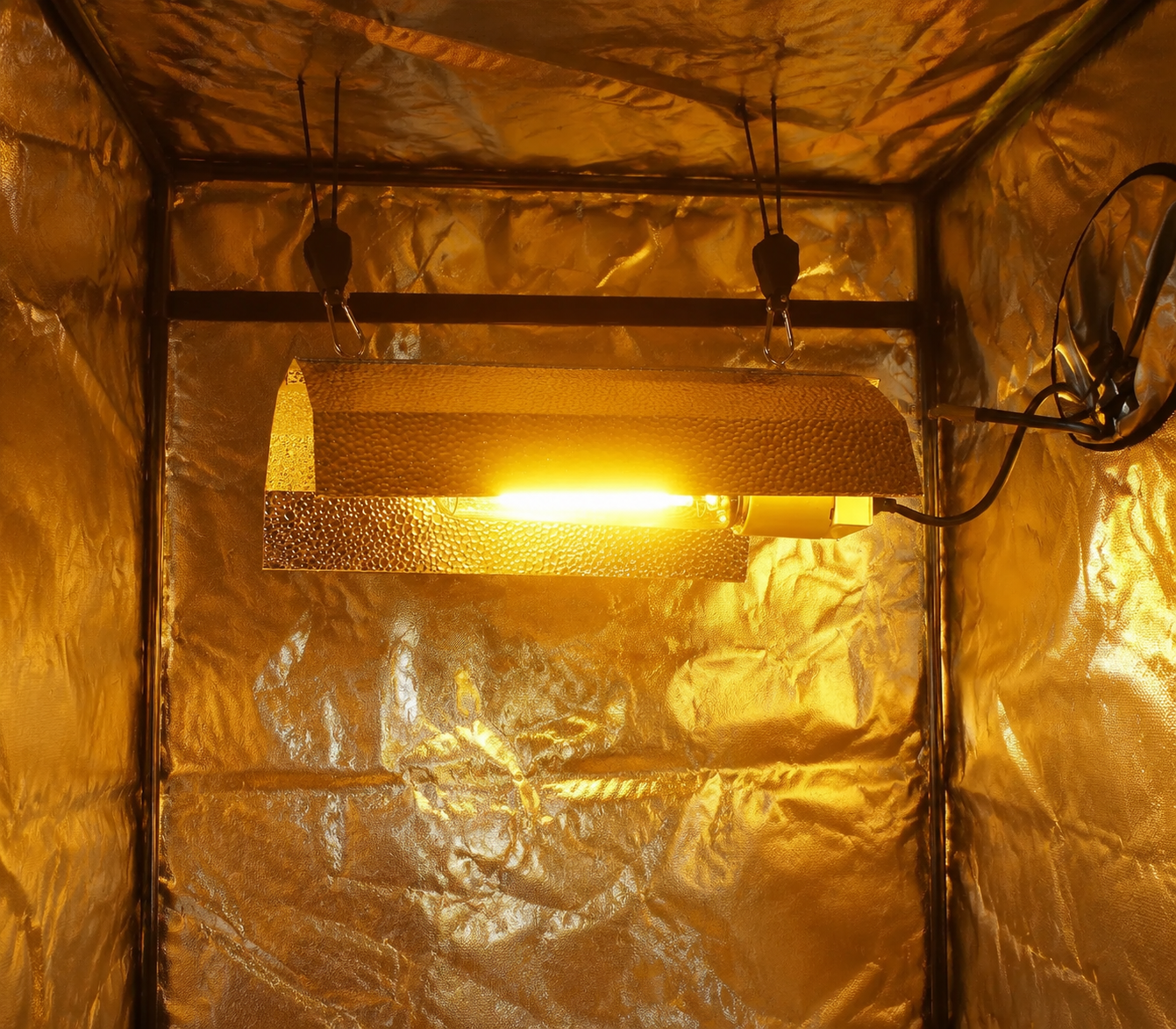
A grow light retrofit that swaps high-pressure sodium (HPS) or other high-intensity discharge (HID) fixtures for light-emitting diode (LED) fixtures can cut per-square-foot electricity use by 24 to 31 percent, according to the U.S. Department of Energy. But the energy savings are only part of the upgrade. The rest is planning: the electrical load, the light map, and the paperwork that actually gets a utility rebate approved before you spend a dollar.
Growers who treat the swap as fixture-for-fixture usually find that out mid-install, when a new LED driver trips a breaker sized for old HPS ballasts, or when a utility rejects the rebate application because the exact model number was never confirmed on the DesignLights Consortium (DLC) Qualified Products List. None of that is inevitable. It is a sequence, and the sequence is also what keeps the rebate alive.
Does My Retrofit Qualify for a Rebate?
Your retrofit qualifies for most utility rebates only if the exact LED fixture model and wattage variant appears on the DLC Qualified Products List on the day you apply, not the day you got a quote. Fixture families often include one variant that qualifies and a neighboring wattage option that does not.
This is the step that decides more rebate outcomes than anything else in the retrofit. Confirm the listing at designlights.org by manufacturer and exact model number, and save a dated screenshot, since listings and requirement versions both change over time.
Version 4.0 of the DLC's horticultural requirements set a minimum photosynthetic photon efficacy of 2.5 micromoles per joule, roughly 45 percent above the best non-LED technology on the market. A fixture that cleared an earlier version of the requirements comfortably is not guaranteed to clear this one, which is exactly why the check has to happen at the time of purchase.
How Should I Audit My Electrical System?
Audit panel capacity, circuit amperage, and voltage before ordering any fixtures, not after. LED drivers commonly draw 24 to 31 percent less electricity than HPS per square foot, but a lower draw does not automatically mean your existing panel and circuit layout are already sized correctly for the new load.
Confirm the voltage range the new fixtures need against what is already run to the room. A retrofit that stalls on an unplanned panel upgrade costs more in delay than the panel work itself, and it can push installation past a utility's application deadline.
How Does LED Change My Spacing Plan?
LED fixtures tend to distribute light more like a focused spotlight than the broad, even spread of HPS, so copying the old mounting height and spacing can leave hot spots and shadowed rows even when total photon output looks similar on paper. Model photosynthetic photon flux density (PPFD) at the real mounting height first.
A real light map, not a rule of thumb carried over from the HPS layout, is what catches an uneven canopy before the fixtures are hung rather than after the first harvest comes in inconsistent.
Will My Existing Mounting Still Work?
Some commercial LED fixtures are built to drop into existing HPS trellis and mounting hardware; others require reworked mounting entirely. Confirm fit before ordering, since LED's lower radiant heat output can also change how close a fixture safely runs to the canopy compared with the HPS it replaces.
Getting the mounting question wrong doesn't just add labor. If the light map from the spacing step above assumed one mounting height and the fixtures ship built for another, the facility can end up hanging fixtures twice, once for fit and once for the intensity the plan actually called for.
How Does a Retrofit Change My HVAC Load?
HPS fixtures push a meaningful share of their energy into radiant heat that your heating, ventilation, and air conditioning (HVAC) system was sized around. LED shifts more energy into light and less into heat, which can leave a retrofitted room under-humidified or unevenly cooled unless setpoints and airflow get revisited alongside the fixtures.
Loop HVAC and dehumidification planning into the retrofit at the same stage you finalize fixture selection, not after the fixtures are already hung and the room's microclimate has already shifted. A room that ran humid and warm under HPS can run noticeably cooler and drier under LED at the same setpoints, and that shift affects irrigation and pest pressure as much as it affects the electric bill.
How Should I Sequence the Retrofit?
Phase the swap room by room, starting with a single flower room or one tier of a rack, so you can validate the light map, HVAC response, and rebate paperwork against real production data before committing capital facility-wide. A phased retrofit also keeps the facility producing instead of going dark for a full shutdown.
Before You Order Fixtures
Check the DLC listing on the day you place the order, not the day you got the quote. Confirm the exact model number and wattage variant, since one variant in a fixture family can qualify while a neighboring one does not. Then confirm your utility's program has adopted the same requirements version the fixture is listed under. Programs adopt new DLC versions on their own schedule, and a fixture qualified two years ago may not clear today's bar.
This is also where a managed rebate process earns its keep, since the sequence above is the same sequence a rebate application has to document.
Assess.
We review your facility's current fixtures, utility, and rate structure to estimate rebate eligibility before you spend anything.
Apply.
We submit the pre-approval paperwork your utility requires, referencing the exact DLC-listed model and wattage variant you plan to install.
Approve.
The utility confirms the reserved rebate amount before equipment ships, which is what protects the retrofit's return on investment (ROI).
Upgrade.
Fixtures are installed and commissioned, with the electrical, spacing, and HVAC planning above already accounted for.
Collect.
The utility verifies the installation and issues the rebate check once the upgrade is confirmed.
Some utility rebates can combine with other funding, and some cannot, so it is worth reading a program's stacking rules before assuming a state or federal incentive adds on top of the utility payment. What Rebates handles this sequence end to end — the DLC-listing check, the utility paperwork, and the equipment coordination — for a fee of 10 percent of the rebate itself. If you want to know where your facility stands before you order fixtures, get in touch and we will look at your equipment list and your utility together.
Common questions
Questions growers actually ask
Does an HPS-to-LED retrofit always qualify for a utility rebate?
No. Qualification depends on the exact fixture model appearing on the DesignLights Consortium Qualified Products List and on your specific utility's program rules, budget, and rate structure. Rebates are case-by-case, so confirm eligibility for your equipment and your utility before assuming a project qualifies.
Do I need to upgrade my electrical panel for an LED retrofit?
Sometimes. LED fixtures often draw less power than the HPS fixtures they replace, but the existing panel, circuit amperage, and voltage still need to be audited against the new fixtures' requirements. Some rooms need no electrical work; others need a panel or circuit upgrade before installation.
Can I keep my existing fixture spacing when I switch to LED?
Not automatically. LED fixtures tend to distribute light more narrowly than HPS, so the same spacing and mounting height can create uneven coverage. Modeling photosynthetic photon flux density at the planned mounting height before installation catches spacing problems before they affect a harvest.
How long does a phased LED retrofit take from planning to rebate check?
Timelines vary by utility and facility size, since pre-approval, installation, verification, and payment each run on the program's own schedule. Phasing the retrofit room by room extends the overall project but lets a facility validate results and rebate paperwork before committing to every room at once.